
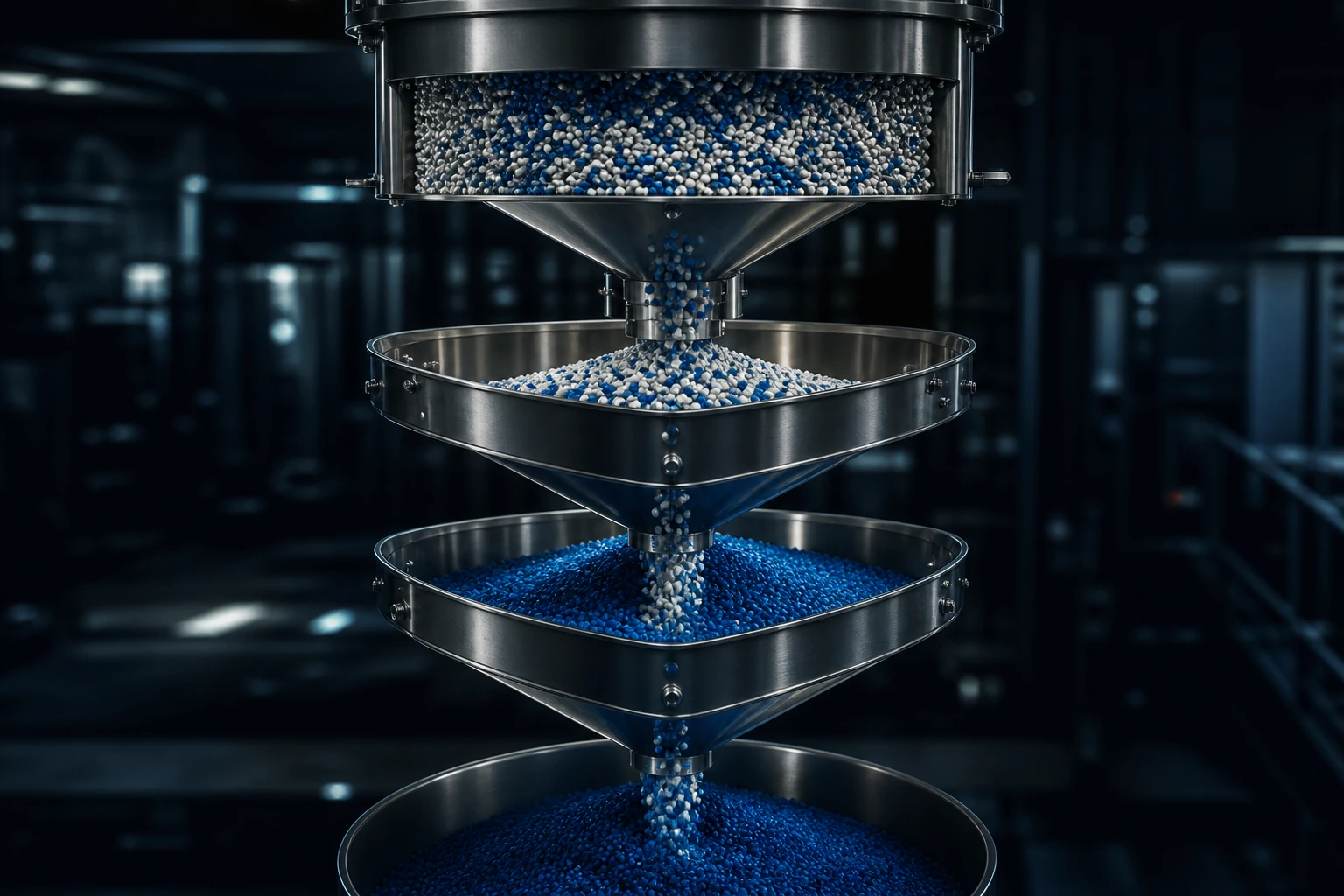
A marketing funnel is the system that moves a stranger from “never heard of you” to “just paid you” — broken into four stages: awareness, interest, decision, and action. That’s it. Not a magic sequence. An architecture you engineer once and let run.
Most businesses don’t have a funnel. They have scattered effort — random posts, random leads, hoping something sticks. The difference is predictability. A real funnel turns guesswork into a system you own, one that pulls demand in and converts it while you stop babysitting every lead.
What Is a Marketing Funnel?
A marketing funnel is the engineered path a stranger travels from first noticing your business to becoming a paying, repeat customer. It’s a system — not a metaphor, not a diagram you saw on LinkedIn once. Every business already has one running whether they designed it or not.
Here’s the problem. Most owners can describe their funnel in their head. They can’t draw it.
Ask a roofer how a lead becomes a booked job and you’ll get a 20-minute story about referrals, that one Google review, the guy who called from a yard sign, and “word of mouth, mostly.” That’s not a funnel. That’s a collection of accidents the owner is holding together with memory and hustle.
A real funnel is the opposite of that. It’s the sequence of stages — awareness, consideration, conversion, retention — that turns attention into revenue, with each stage doing a specific job and handing off to the next. When it’s engineered, it runs without you narrating it. When it lives in your head, it stalls the moment you’re too busy to babysit it.
Think of it as the architecture underneath your marketing. Ads, content, your website, your follow-up emails — those are components. The funnel is how they connect into something that compounds instead of scattering. A stranger sees you. They start to trust you. They buy. They come back and refer. Each step is a lever you can measure, test, and improve. If you want the deeper theory, the purchase funnel model has framed buyer decision stages since the early 1900s.
This is the difference between marketing and advertising — one is a system, the other is a line item. If you want the wider frame, we break it down in Modern Marketing Strategy: The 5-Step System to Engineer Predictable Growth.
The metaphor is the shape. The system is the asset you own.

Why Most ‘Funnels’ Are Just Vibes, Not Systems
Most “funnels” aren’t funnels. They’re a pile of disconnected touchpoints held together by hope and the owner’s memory.
Here’s what it usually looks like. A Facebook post that went out three weeks ago. A referral from a past client who liked you. A quote request that sat in your inbox for two days before you called back. A website that describes your services but asks nobody to do anything. Individually, each one produces the occasional lead. Together, they produce nothing predictable.
That’s not a system. That’s noise you’ve decided to call a strategy.
The difference is architecture. A real funnel has defined stages, owned assets, and a measurable conversion rate at each step. You know how many people land at the top, how many move to the next stage, and where they leak out. When something breaks, you can point to the exact stage and fix that — not blindly “post more” and pray.
Scattered touchpoints fail on three predictable fronts:
- No owned assets. Your reach lives on a platform that can throttle you overnight. An email list, a ranking page, a database — those are assets you own. A viral post is a rental.
- No defined stages. If you can’t name where a lead is in the process, you can’t move them forward on purpose.
- No follow-up engine. Speed-to-lead decides deals. A two-day callback is a lost deal wearing a “we’re busy” costume.
This is the same discipline behind Direct Marketing: 5 Systems for Predictable Growth — engineer the repeatable parts so demand doesn’t depend on you remembering to hustle.
The fix is a funnel built as a system with four clear stages. That’s what the rest of this breaks down.
The 4 Stages of a Marketing Funnel
A marketing funnel has four stages: Awareness, Consideration, Conversion, and Retention & Advocacy. Each one is a distinct job with a distinct metric. Most businesses obsess over the first and the third, then wonder why growth stalls. The whole system only compounds when all four are engineered — not just the loud ones.
Awareness: Getting Found by the Right People
Awareness is the top of the funnel — where a stranger first learns you exist. The goal isn’t reach. It’s the right reach. A roofer ranking for “roof leak repair [city]” pulls in buyers with intent; a viral reel about roofing memes pulls in nobody who’ll pay you. This is where search leverage lives: engineer content and SEO/AEO so demand finds you, instead of renting attention through ads forever. Measure qualified traffic, not vanity impressions.
Consideration: Where Trust Is Built or Lost
Consideration is the middle — the stage where a prospect decides whether you’re credible or just another option. This is where deals quietly die. They read your reviews, compare you against three competitors, and scan your site for proof. Your job here is to remove doubt: case studies, specific results, clear answers to the objections in their head. Nail the difference between marketing and advertising systems and you stop leaking trust exactly where it matters most.
Conversion: Turning Interest Into a Paying Customer
Conversion is the moment interest becomes revenue — the booked call, the signed contract, the checkout. This is one clear action, not a maze. Strip the friction. One offer, one CTA, one obvious next step. Most sites bury this under nav links and vague “contact us” buttons and hemorrhage ready-to-buy leads.
Retention & Advocacy: The Stage Everyone Skips
Retention and advocacy is the bottom — the stage almost everyone ignores, and the one that compounds. A happy client who refers two more is the cheapest, highest-trust lead you’ll ever get. Engineer it: follow-up sequences, referral asks, review requests. This is the asset you own — an audience that sells for you while you do less.

Marketing Funnel vs Sales Funnel: What’s the Difference?
The marketing funnel is the whole journey — from a stranger who’s never heard of you to a loyal customer who refers others. The sales funnel is a subset: the part that kicks in once a lead is qualified and someone (or some system) is actively working to close them. Same customer, different zoom level.
Think of it as architecture. The marketing funnel handles the top and middle — getting found, building trust, warming people up until they raise their hand. That’s demand generation and nurture at scale, mostly automated, mostly not one-to-one. The sales funnel is the bottom: qualified lead, discovery call, proposal, close. It’s higher-touch, higher-intent, and often involves a human. For a coach it might be the application-to-strategy-call sequence. For a roofer it’s the quote-to-signed-contract stretch. For a B2B operation running a longer pipeline, the sales funnel can span weeks of follow-up while the marketing funnel did the heavy lifting of getting that lead to trust you in the first place.
Here’s the tradeoff most people miss: a great sales funnel with a broken marketing funnel means your best closer is starving for leads. A great marketing funnel with no sales process means warm prospects leak out the bottom because nobody catches them. You need both engineered, and you need to know where one hands off to the other. The handoff is where deals die — a lead goes cold in an inbox, a form fill never gets a call back, a “maybe next quarter” never gets a follow-up. Draw the line clearly. Marketing owns the journey to qualified. Sales owns qualified to closed. Build the system so nothing falls through the seam.
How Do You Build a Marketing Funnel for a Local Business or Coaching Practice?
Start by defining the single action you want at each stage — one per stage, not five. Then audit what you already have, plug the gaps with assets you own, and refuse to skip retention. That’s the whole build. Most owners overcomplicate step one and never reach step four.
Define the one action per stage
Awareness: get found. Consideration: get them onto an owned channel — email list or a booking calendar. Conversion: get the call booked or the deposit paid. Retention: get the review, the referral, the repeat job. Write those four actions on one line. If you can’t, your funnel is still vibes.
Audit your existing touchpoints
You already have a funnel. It’s just leaking. Map every place a stranger touches your business — Google profile, site, DMs, voicemail, quote email — and mark where they go cold. For most local shops the leak is between “interested” and “booked.” A form that emails an inbox nobody checks is not a system. It’s a graveyard.
Plug the gaps with owned assets
This is the leverage. A site that ranks and converts. An email sequence that follows up so you don’t have to remember. A booking link that kills the phone-tag arbitrage. These are assets you own — not rented attention on someone else’s platform. Build them once, they compound.
Don’t skip retention
An automated review request and a 90-day check-in outperform any new ad. It’s cheaper to sell to someone who already paid you than to win a stranger.
Realistic timeline: expect 4 to 8 weeks to stand up the core system, then ongoing tuning. This isn’t set-it-and-forget-it — the tradeoff is upfront engineering for a machine that runs without you babysitting it. Ship the first version. Then compound it.
Where Growth Marketing and Account-Based Marketing Fit In
Growth marketing and account-based marketing aren’t separate from the funnel — they’re two different ways to operate on top of it. Growth marketing is systematic experimentation across every stage. ABM is a narrow funnel engineered around a short list of named accounts. Same architecture, different aperture.
Growth marketing means you stop guessing and start testing. You run experiments at each stage — a new awareness channel, a better consideration email sequence, a rewritten conversion offer — and you keep what compounds. The discipline isn’t “try more stuff.” It’s measuring the arbitrage: which lever moves the needle per dollar, then doubling down. A local service business might test three lead magnets against the same traffic and find one converts far better than the others. That’s not a hunch. That’s a system that learns.
Account-based marketing flips the logic. Instead of pulling in demand and filtering it down, you pick the accounts you want — say, 40 named companies — and build the funnel backward from them. Personalized outreach, targeted content, sales and marketing running the same play. It’s slower and heavier per contact, which is exactly why it’s a B2B move, not a coaching-practice move. When one closed deal is worth $50K, engineering a funnel around 40 targets is rational math. When your average client is worth $2K, it’s a waste of leverage.
Here’s the honest tradeoff: growth marketing widens the top and optimizes the whole pipe. ABM ignores the top entirely and engineers a private path to accounts you’ve already chosen. Most local businesses and coaches want the first. B2B operators selling high-ticket contracts want the second — and if that’s you, we broke down the full playbook in our guide to building B2B marketing systems. Pick the aperture that matches your deal size. Then engineer it.
The Cost of Not Engineering Your Marketing Funnel
The cost isn’t a line item on a spreadsheet. It’s you. Your time, your energy, your 14-hour day spent doing the follow-up a system should be handling on its own.
Here’s what “no funnel” actually looks like in practice. A lead comes in. You’re mid-job, on a ladder, in a client call. You’ll get to it later. Later becomes tomorrow. Tomorrow becomes never. The lead goes cold and hires the competitor who called back in ten minutes.
That’s not a marketing problem. That’s an architecture problem.
Without a system, every part of your growth depends on you remembering to do it manually:
- Leads go cold because follow-up lives in your head and your inbox, not in a workflow that fires automatically.
- Referrals are random — great in a good month, silent in a bad one, because nothing exists to systematically ask happy customers to refer or review.
- You are the bottleneck. Every quote, every reminder, every re-engagement waits on your attention. Growth stops the second you take a day off.
This is the trap traditional agencies never fix. They sell you a website and a logo, then leave you to run the actual demand-generation and follow-up by hand. So you grind. You chase. You burn out. And you tell yourself you just need to work harder.
You don’t. Working harder inside a broken system just gets you exhausted faster.
The businesses that compound aren’t the ones with the most hustle. They’re the ones who engineered the repeatable parts — the finding, the nurturing, the following-up — into a system that runs whether the owner is on the ladder or on vacation. That’s the arbitrage. Build it once. It works while you don’t.
Build the System, Not Another One-Off Campaign
A funnel isn’t a campaign you run once and forget. It’s an asset you own — an architecture that pulls in demand, builds trust, and converts on repeat while you sleep. Most businesses don’t have that. They have a pile of one-off campaigns held together by hope and a busy owner.
That’s the difference between scattered effort and a system. Scattered effort spikes when you push and dies when you stop. A system compounds.
Here’s the honest part: you already have a funnel. Every business does. The question is whether yours is engineered — or just leaking.
Leaks are rarely where you think. The traffic looks fine, but the site doesn’t convert. Or the leads come in and nobody follows up. Or you close the sale and never turn that customer into a referral engine. One weak stage caps the entire system, no matter how hard you work the others.
So don’t guess. Audit.
A proper funnel audit does three things:
- Maps the whole system — awareness through advocacy — so you see every handoff, not just the parts you stare at daily.
- Finds the leaks — the stage where trust dies, leads go cold, or interest never becomes revenue.
- Engineers the fix — search that pulls demand, a site built to convert it, AI that handles the follow-up you keep dropping.
That’s the whole game. Not more hustle. More leverage. Fix the one stage bleeding money and the entire engine gets more efficient — no extra hours from you.
If your growth still lives in your head, your inbox, and your 14-hour day, that’s the real problem. Let’s move it into a system.
Book a funnel audit. We’ll map your current system, show you exactly where it’s leaking, and hand you the plan to engineer the fix — so your business compounds while you do less.
Frequently Asked Questions
What are the stages of a marketing funnel?
Four stages: awareness, consideration, conversion, and retention/advocacy. Awareness pulls the right people in. Consideration builds the trust. Conversion turns interest into money. Retention compounds it — the stage most businesses skip, which is exactly why they stay stuck chasing new leads forever. Each stage has its own job, its own content, and its own metric. Skip any one and the system leaks.
How is a marketing funnel different from a sales funnel?
Different levers. Same customer, different zoom.
Marketing warms them up. Sales closes the deal. The marketing funnel owns the top and middle — getting found, building trust at scale, mostly hands-off. The sales funnel owns the bottom — calls, quotes, follow-ups that turn a warm lead into a signed customer. Confuse them and both stall: a great closer starves without leads, a great marketing engine leaks warm prospects with nobody to catch them. You engineer both, then draw the handoff line clean so nothing falls through the seam.
How long does it take to build a marketing funnel?
A basic working funnel — site that converts, a lead magnet, one traffic source, follow-up automation — can ship in 2 to 4 weeks. Compounding SEO and content momentum takes longer, usually 3 to 6 months before the top of the funnel pulls demand on its own. A paid funnel converts faster because you’re buying traffic outright; it just stops the moment you stop paying. Organic is slower but becomes an asset you own. The point isn’t speed. It’s building something that keeps working after you stop touching it.
What is a good conversion rate for a marketing funnel?
It depends entirely on the stage and the offer, so ignore any single “good” number. A cold-traffic lead magnet opt-in converts in a very different range than a high-ticket purchase — a top-of-funnel opt-in will always convert at a much higher percentage than someone handing over four figures at the bottom. Both can be perfectly healthy at wildly different rates. So stop chasing one blanket number. Measure stage-to-stage conversion instead — that’s how you find the exact spot where the funnel is leaking instead of guessing.
Do small businesses need a marketing funnel?
Yes — arguably more than the big players. A local painter, HVAC company, or coach can’t afford to burn ad spend on random leads or chase referrals with no system behind them. A funnel is just the difference between hoping the phone rings and engineering it to. Search pulls demand in, a page converts it, and follow-up closes it — without you babysitting every lead. Small margins make leverage non-negotiable.
What tools are used to build a marketing funnel?
Keep it boring and functional: a fast website, a CRM to track leads, email or SMS automation for follow-up, and an analytics layer so you can audit what’s actually converting. The tools matter less than the architecture connecting them. Most businesses own the tools already — they just never wired them into a system.
Here’s the honest kick: a funnel drawn on a whiteboard doesn’t convert anyone. The system has to actually exist — a page that ranks, captures, and closes while you’re on a job or asleep. That’s an asset you own, not a task on your to-do list. If you’re tired of doing the work in your head instead of in a system, we’ll engineer the whole thing — and launch your high-converting funnel page in a single day, money-back guaranteed. Stop leaking leads. Ship the system.